

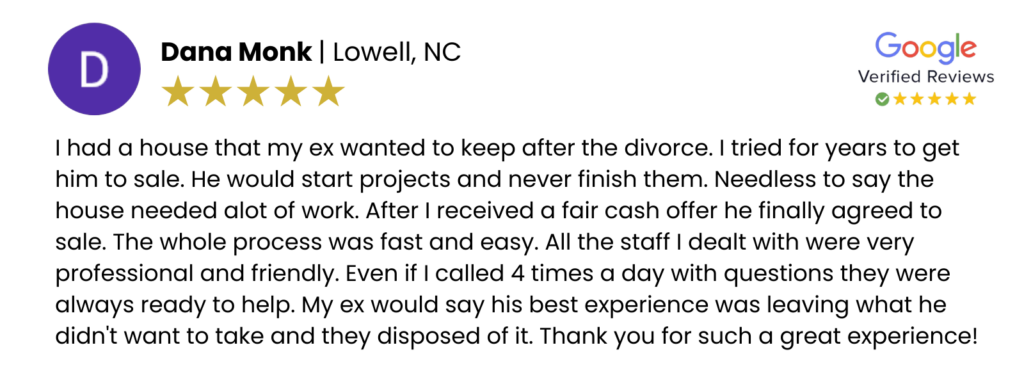
Trusted by North Carolina Homeowners
4.9-Star Google Rating from Real Local Sellers
Selling a house during a divorce in North Carolina is rarely just a real estate decision.
For many couples, the home is the largest shared asset, and one of the hardest to resolve cleanly.
Divorce already brings enough stress on its own. Adding repairs, showings, pricing decisions, and ongoing negotiations can make the process even more difficult.
For North Carolina homeowners going through a divorce, a direct cash sale is often the simplest way to turn the house into a clear number both people can work with and finally separate the financial side of things.
At 3 Step Home Sale, we work with North Carolina homeowners who need a straightforward option for selling a marital home during divorce — without adding more delays, conflict, or uncertainty.

How North Carolina Handles the Marital Home in Divorce
North Carolina is an equitable distribution state. That means marital property is divided fairly, though not always equally. Courts determine what is marital property and then provide for equitable distribution under North Carolina law.
In many cases, the marital home is part of that process.
The court may consider factors such as:
- The length of the marriage
- The contributions of each spouse
- Financial circumstances of each party
- Other factors relevant to an equitable outcome
North Carolina also generally requires one year of separation before a no-fault divorce can be finalized.
That means many spouses remain tied to the same property for months before the divorce itself is final.
Selling a House During Separation in North Carolina
In North Carolina, spouses can often agree to sell the house during the separation period rather than waiting until the divorce is final.
If both parties are on title, both typically need to agree and sign the closing documents.
- When both people are aligned, the process is usually much simpler.
- When they are not, the house can quickly become another source of delay and tension.
For many couples, selling the property during separation creates a cleaner path forward by turning the asset into cash that can later be addressed in the broader divorce settlement.
What Happens If One Spouse Does Not Want to Sell
When one spouse wants to sell and the other does not, the situation becomes more complicated.
North Carolina courts have authority in equitable distribution matters involving marital property, and that can include real estate as part of the property settlement process.
If you are at an impasse, it is important to speak with your divorce attorney about what options are available in your case.
In many situations, a real cash offer can help move the conversation from emotion to numbers.
Instead of debating what the house might sell for, both parties have a concrete number they can review and evaluate.
Why a Cash Sale Often Fits a Divorce Better Than a Traditional Listing
A traditional home sale during divorce usually creates more decisions, more delays, and more opportunities for conflict.
There are repairs to discuss.
Showings to coordinate.
Pricing changes to debate.
Buyer negotiations to manage.
A direct sale simplifies that process:
- One offer for both parties to review
- No repairs or updates to argue about
- No showings or open houses
- A clear closing date
- No agent commissions reducing the equity being divided
For many North Carolina couples, that clarity matters more than chasing the highest possible retail price.
How Equity Is Usually Handled at Closing
When the home sells, the mortgage is typically paid off from the sale proceeds at closing.
The remaining equity is then divided according to the divorce agreement, court order, or other legal arrangement between the parties.
A direct sale gives both spouses a real number to work with, not an estimated listing price that could change with the market, repairs, or buyer negotiations.
That kind of certainty can make the financial side of the divorce much easier to resolve.
Why North Carolina Homeowners Choose a Direct Sale During Divorce
When a marriage is ending, most people are not looking for a complicated sale.
They are looking for a practical way to move forward.
A direct sale can help reduce conflict by removing many of the moving parts that tend to create more disagreement.
It also gives both spouses the same information at the same time, which can make decision-making more straightforward.
Why North Carolina Homeowners Work With 3 Step Home Sale
We work with homeowners across North Carolina who need a simple, direct option for selling a house during divorce.
We are direct buyers, not listing agents, which means we evaluate homes based on their current condition and the realities of the situation.
Our goal is to provide a clear offer both parties can review without adding more pressure to an already difficult process.
Practical Steps for a Lower-Conflict Divorce Home Sale
A few practical decisions can make the process easier:
- Agree upfront on how offers will be reviewed
- Decide what range both parties are willing to consider
- Keep communication focused on numbers, not history
- Use neutral professionals when possible
- Prioritize certainty when speed and simplicity matter most
For many couples, that structure helps keep the house from becoming a longer and more expensive point of conflict.
Explore Your Options for Selling a House in North Carolina
If the house also involves other challenges, you may want to explore:
- Selling a Distressed Property in North Carolina
- Selling a House That Needs Repairs in North Carolina
- Stop Foreclosure in North Carolina
- Sell an Inherited House in North Carolina
- Selling a House When Relocating from North Carolina
- Selling a Rental Property with Problem Tenants in North Carolina
Every situation is different, but the goal is the same — finding a realistic way forward. We work with homeowners throughout North Carolina, including Jacksonville, Statesville, Wilson, Sanford, Monroe and surrounding communities.
Common Questions About Selling a House During Divorce in North Carolina
Is North Carolina an equitable distribution state for divorce?
Yes. North Carolina is an equitable distribution state, which means marital property is divided fairly, though not always equally.
Can I sell my house before my divorce is final in North Carolina?
In many cases, yes. If both spouses agree and have the authority to sell, the house can often be sold during the separation period before the divorce is finalized.
What if my spouse refuses to sell the house during a North Carolina divorce?
If one spouse refuses to cooperate, you should speak with your divorce attorney. The court can address marital real estate as part of the equitable distribution process.
Do we need to make repairs before selling during a North Carolina divorce?
No. If you sell directly, the property can be sold as-is without repairs, updates, or showings.
How is the equity usually divided when the house sells?
The mortgage is typically paid off at closing first. The remaining proceeds are then divided based on the agreement between the spouses or the court’s order.
Do both spouses usually need to sign to sell the house?
In most situations, yes, if both spouses are owners on title. The exact requirement depends on ownership and the legal status of the property.
Related Articles
- Selling a House Fast When You’re Concerned or in Financial Stress
Learn how selling quickly can help homeowners move forward during difficult financial or life situations. - What Is the Best Way to Sell Your House Quickly?
Discover the fastest ways homeowners sell their property when they need a simple and stress-free solution. - How to Sell a Distressed House Fast (No Repairs Needed)
Learn how homeowners sell houses as-is without spending money on repairs or updates. - Frequently Asked Questions About Selling Your House for Cash
Get answers to common questions about selling your house quickly without commissions or repairs.
Move Forward Without More Conflict
If selling the house has become one more difficult part of an already difficult process, it may help to start with a clear number.
We’ll review the North Carolina property, explain what we see, and provide a straightforward, no-obligation offer that both parties can evaluate.
Get An Offer Today & Pick Your Close Date
Fill Out the Form and Our Team Will Call With Your Offer