


Key Takeaways
- Most Georgia cash home sales close in 7 to 21 days from the time an offer is accepted
- Georgia’s attorney-at-closing requirement does not significantly slow the process — it is a brief, well-established step
- The title search, which typically takes 5 to 10 business days, is where most delays originate
- Eliminating the appraisal and loan underwriting stages saves 3 to 6 weeks compared to a traditional sale
- Military sellers near Fort Stewart or Robins Air Force Base can often close before PCS reporting dates
- Communicate hard deadlines upfront — a credible buyer will tell you honestly whether they can meet them
If you want to sell a house with a lien in Georgia, the short answer is yes — in most cases. A lien on your property does not automatically prevent a sale. What it does is require that the lien be resolved before or at closing, either by paying it off from the sale proceeds or by negotiating a settlement with the lienholder. For many Georgia sellers, this happens without the sale falling through at all.
The longer answer depends on the type of lien, how much is owed, and whether your sale proceeds are sufficient to cover it. This guide walks through the most common types of liens Georgia sellers encounter, how each one is handled, and why cash buyers are often better equipped than traditional buyers to navigate them.
How liens are discovered in Georgia
Before any Georgia home sale closes, a closing attorney conducts a title search using the public land records maintained by the Georgia Superior Court Clerks’ Authority (GSCCCA). This statewide index of recorded deeds, liens, and encumbrances will surface any lien that has been legally recorded against the property.
The title search also covers county property tax records and court judgment indexes. If a lien exists and has been properly recorded, it will appear. If the title search finds liens that are not disclosed by the seller, it can complicate the timeline — which is why being upfront about known liens from the first conversation with your buyer is always the better approach.
Types of liens common in Georgia home sales
Mortgage liens
A mortgage or deed of trust lien is the most common lien Georgia sellers carry. This is the lien held by your lender against the property as security for your loan. It is not a complication — it is a standard part of nearly every home sale. At closing, your outstanding mortgage balance is paid off from the proceeds before the remainder is distributed to you. Your closing attorney coordinates the payoff directly with your lender.
Property tax liens
Unpaid property taxes in Georgia create a lien that must be satisfied before a clean title can transfer. Georgia counties have the authority to sell a property at a tax sale if taxes go unpaid, so resolving a property tax lien is typically a condition of closing regardless of the type of sale. The amount owed, including any penalties and interest, is confirmed with the county tax commissioner’s office and paid at closing.
IRS federal tax liens
A federal tax lien filed by the Internal Revenue Service attaches to all property the taxpayer owns in the state, including real estate. Federal tax liens are recorded with the Georgia Superior Court Clerks’ Authority and will surface in a title search. They must be released before or at closing. In many cases, the IRS will issue a discharge of the lien on a specific property to allow a sale to proceed, even if the broader tax debt is not fully resolved. Sellers in this situation should contact the IRS or work with a tax attorney before listing. The IRS provides information on this process at irs.gov.
HOA liens
Georgia homeowners associations have the authority to place a lien on a property for unpaid dues, assessments, or fines under O.C.G.A. § 44-3-109. These liens are typically smaller in amount and are resolved by paying the outstanding balance at closing. However, if an HOA lien is left unaddressed, the association may have the right to pursue foreclosure on the property in Georgia. Confirm the full amount owed, including any interest and collection fees, before closing.
Judgment liens
If a creditor has obtained a court judgment against you in Georgia, that judgment can be recorded as a lien against your real property. Judgment liens attach to all real property the debtor owns in the county where the judgment is recorded under O.C.G.A. § 9-12-80. They must be paid or released before a clean title can transfer. In some cases, judgment creditors will negotiate a reduced payoff settlement, particularly if the full balance would not be recovered through a forced sale. A real estate attorney can assist with this negotiation.
Mechanic’s liens
If a contractor or supplier performed work on your Georgia home and was not paid, they may have filed a mechanic’s lien under O.C.G.A. § 44-14-361. These liens are time-sensitive — Georgia law requires them to be filed within 90 days of the last date work was performed. If a valid mechanic’s lien is on record, the amount owed must be resolved before or at closing.
How liens are handled at closing
In a standard Georgia home sale, the closing attorney prepares a settlement statement that accounts for all outstanding liens. Each recorded lien is paid off from the sale proceeds before the remaining funds are distributed to the seller. The closing attorney coordinates payoff requests from each lienholder, confirms the exact amounts owed including interest and fees, and ensures each lien is released at or after closing.
This process is routine. Georgia closing attorneys handle lien payoffs on a regular basis, and the existence of a lien — even more than one — does not automatically derail a sale. What matters is whether the total proceeds from the sale are sufficient to cover the liens.
Get An Offer Today & Pick Your Close Date
Fill Out the Form and Our Team Will Call With Your Offer
When a lien can block a sale
A lien becomes a more serious obstacle when the total amount owed across all liens exceeds the sale price. In this situation, there is not enough money from the sale to pay off all lienholders and still transfer a clean title to the buyer.
In these cases, sellers have several options. They can negotiate with one or more lienholders to accept a reduced payoff amount. They can pursue a short sale, where the lender agrees to accept less than the full mortgage balance. They can bring cash to closing to cover the shortfall. Or, in cases of severe financial distress, they may need to consult with a bankruptcy attorney about available options.
If you believe your liens may exceed your home’s value, address this early. A real estate attorney or HUD-approved housing counselor can help you understand your options before you commit to a sale.
Why cash buyers have an advantage with liens
When a buyer is financing through a bank, the lender’s underwriting process adds requirements around clear title that can make lien resolution more complicated and time-consuming. The lender’s appraisal must support the purchase price, and the lender will not fund the loan until all title issues are cleared.
Cash buyers do not have a lender involved, which means there is no underwriting review, no appraisal contingency, and more flexibility in how title issues are handled and on what timeline. For Georgia sellers dealing with multiple liens, a tax lien requiring IRS coordination, or a judgment requiring negotiation, working with a cash buyer often allows the process to move faster and with fewer third-party approvals at each step.
Cash buyers experienced in Georgia real estate have typically worked through these situations before, understand the process, and can give you a realistic picture of what resolution involves rather than walking away at the first complication.
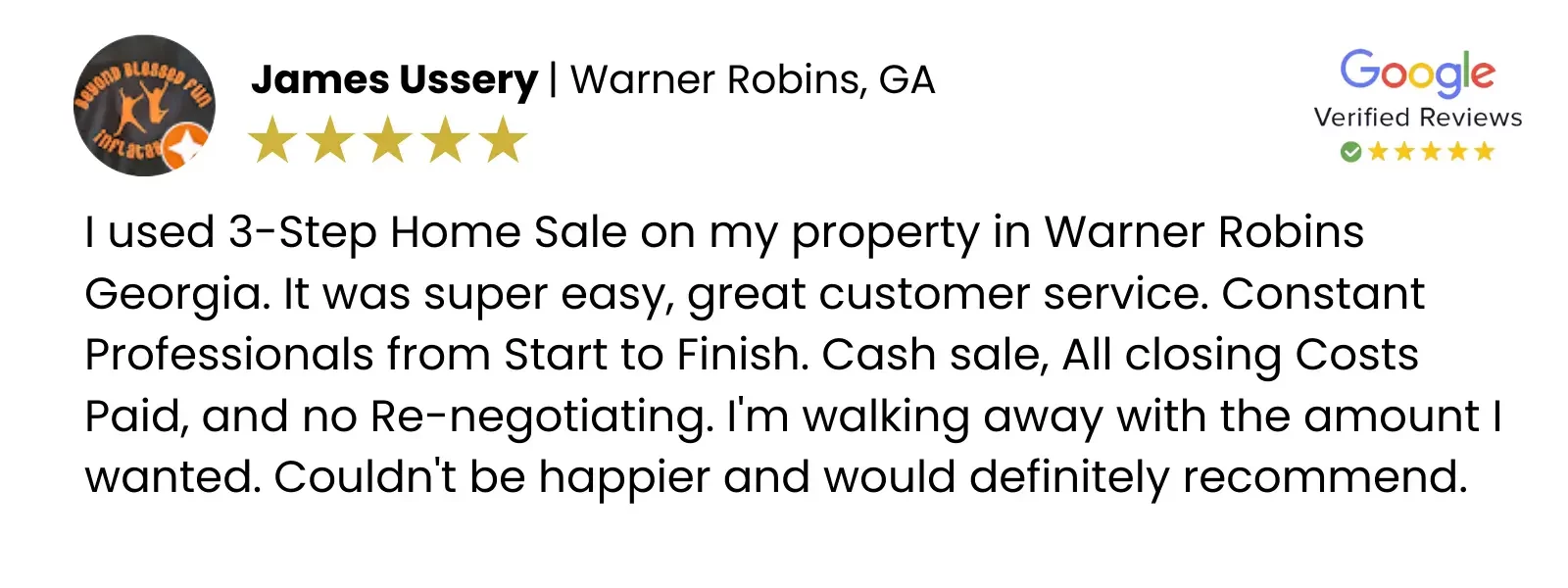
See What Homeowners Have To Say About 3 Step Home Sale
When you’re dealing with an inherited property, a difficult co-ownership situation, or simply need to sell fast, choosing who to trust matters. Here’s what real homeowners have said about working with 3 Step Home Sale.
Conclusion
A lien on your Georgia home is a problem that can be solved — and in most cases, it is solved at the closing table. The key is knowing what you’re dealing with before you get there. The earlier you identify the liens on your property, the more options you have for resolving them, negotiating them down, and keeping the sale on track.
If you’re unsure what liens may be on your property, a closing attorney can run a preliminary title search before you even list the home or accept an offer. That information costs you very little and tells you exactly what you’re working with.
Frequently Asked Questions
Do I have to disclose liens to a buyer in Georgia?
You are required under Georgia law to disclose known material facts about the property, which includes known liens. Beyond the legal obligation, disclosing liens upfront is in your practical interest. The title search will find recorded liens regardless. Disclosing early allows the buyer and closing attorney to begin working on resolution immediately rather than discovering it mid-process and potentially delaying closing.
Can I sell my Georgia home if I owe back property taxes?
Yes, in most cases. Unpaid property taxes create a lien that is resolved at closing from the sale proceeds. The county tax commissioner’s office will confirm the total amount owed including penalties and interest, and that balance is paid before funds are distributed to the seller. If the tax debt is very large relative to the home’s value, a cash buyer or negotiated payoff may be necessary.
How long does it take to resolve a lien in Georgia?
It depends on the type. Mortgage payoffs and HOA balances are typically confirmed and paid within the normal closing window. Property tax liens are similarly straightforward. IRS federal tax liens can take longer because they require direct coordination with the IRS to obtain a discharge or subordination. Judgment liens requiring creditor negotiation also vary. Your closing attorney will give you a realistic timeline once the title search results are in.
Can a cash buyer purchase my Georgia home even with multiple liens?
Yes, provided the total proceeds from the sale are sufficient to cover the liens and any negotiated settlements. Cash buyers are generally more comfortable than financed buyers with the complexity of multiple liens, because there is no lender imposing additional conditions or timelines. The closing attorney manages each payoff as part of the closing process.
What is the difference between a lien release and a lien payoff?
A payoff is the act of paying the outstanding balance owed to the lienholder. A release is the legal document recorded by the lienholder confirming that the lien has been satisfied and no longer encumbers the property. Both steps are necessary for a clean title transfer. Your closing attorney will confirm that releases are properly recorded after payoffs are made.
What happens if a lien is found after closing in Georgia?
Title insurance protects buyers and lenders against liens that were not discovered or disclosed before closing. If you are selling, your closing attorney will typically require that all discovered liens be resolved before disbursing funds. A lien found after closing is a more complex situation that may involve title insurance claims and legal action. This scenario is uncommon when a thorough title search is conducted by a licensed Georgia closing attorney.
Sell your Georgia home on your schedule
At 3 Step Home Sale, we are experienced in purchasing Georgia properties that carry existing liens, back taxes, HOA arrears, and other title complications. We work directly with closing attorneys to resolve what needs to be resolved, and we give sellers a clear, honest picture of what the process looks like before they commit to anything.
We serve homeowners across Georgia, including Columbus, Albany, Covington, Newnan, and Rome, as well as communities throughout the state. Visit our Georgia home buyers page to request a free offer, or learn more about what your home is worth selling as is vs. after repairs before you reach out.
Related reading: How long does a cash home sale take to close in Georgia? | How does selling to a cash buyer work in Georgia? | We buy houses in Georgia