
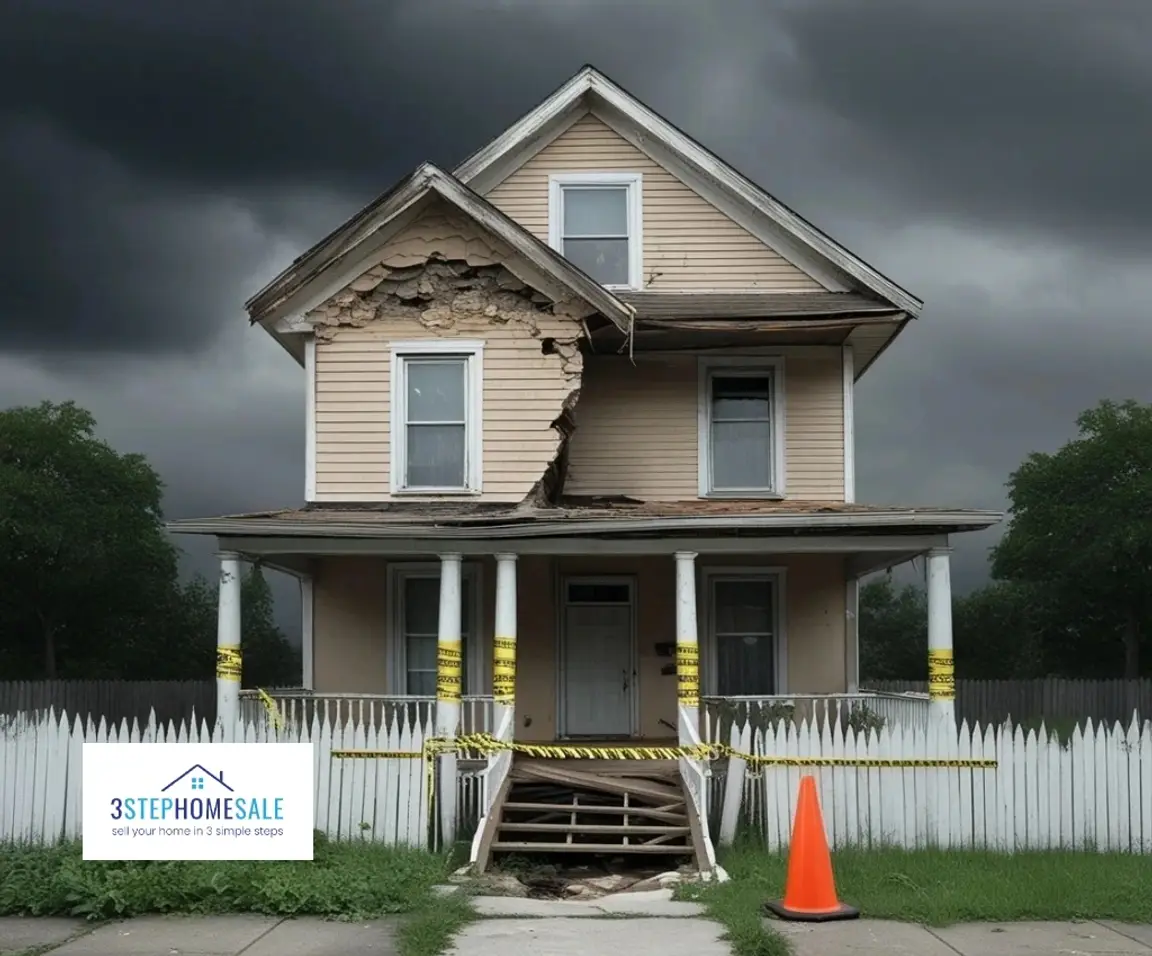
Selling a house with foundation problems in Texas is one of the most common and most stressful situations a homeowner can face. Texas’s expansive soils cause more foundation movement than almost any other state in the country, and what starts as a hairline crack in a wall or a door that won’t close properly can quickly become a significant obstacle when it comes time to sell.
The good news is that foundation problems don’t have to end your home sale. But they do require you to understand your options clearly — what you’re legally required to disclose, what repairs actually cost, how lenders respond to foundation issues, and which selling path makes the most financial sense for your specific situation.
This post covers all of it so you can make an informed decision rather than an expensive one.
Why Foundation Problems Are So Common in Texas
Texas has some of the most challenging soils for residential foundations in the United States. The expansive clay soils that dominate much of Central, North, and East Texas — sometimes called “black cotton soil” or simply “Texas clay” — shrink dramatically during dry periods and expand significantly when wet. This constant movement puts relentless pressure on foundations, causing cracking, shifting, and settlement over time.
In West Texas markets like Midland and Odessa, caliche soil — a calcium carbonate hardpan layer — creates different but equally serious foundation challenges. Caliche layers can be extremely hard and non-porous, causing water to pool at the surface rather than drain away from the foundation, accelerating moisture-related foundation movement.
In North Texas markets like Wichita Falls, the combination of clay soils and dramatic temperature swings between hot dry summers and cold winters creates some of the most severe foundation movement cycles in the state.
The result is that foundation issues are not an anomaly in Texas — they are a routine reality that affects hundreds of thousands of homes across the state, particularly those built before modern foundation engineering standards were widely adopted.
What Texas Law Requires You to Disclose
Before exploring your selling options, it is critical to understand your legal disclosure obligations. Under Texas Property Code § 5.008, sellers of residential property are required to complete a Seller’s Disclosure Notice that includes questions about the condition of the foundation. You are required to disclose foundation defects that you are aware of.
Failing to disclose known foundation problems can expose you to significant legal liability after the sale, including claims for fraud, misrepresentation, or violations of the Texas Deceptive Trade Practices Act under Texas Business and Commerce Code Chapter 17. Texas courts have awarded significant damages in cases where sellers concealed known foundation issues.
The disclosure requirement applies whether you sell through a realtor, sell for sale by owner, or sell to a cash buyer. It is not optional and should not be treated as one. The Texas Real Estate Commission (TREC) provides the standard Seller’s Disclosure Notice form that meets state requirements.
Transparency about foundation issues actually serves sellers well in most cases. Buyers who discover undisclosed foundation problems after closing are far more motivated to pursue legal remedies than buyers who knew about the issues upfront and accepted the property accordingly.
How Foundation Problems Affect Your Ability to Sell Traditionally
This is where the practical challenge becomes clear. Even if you are prepared to disclose foundation issues honestly, the financing requirements of conventional buyers create a significant obstacle.
- Conventional loans: Most conventional lenders require the property to be in a condition that meets minimum habitability and structural standards. Visible foundation issues — cracks in walls, uneven floors, sticking doors, gaps between walls and ceilings — frequently trigger lender requirements for either repairs or a structural engineer’s evaluation before the loan can be approved. If an engineer identifies active movement or significant structural compromise, the lender may decline the loan entirely regardless of the buyer’s willingness to purchase.
- FHA and VA loans: These government-backed loan programs have strict minimum property requirements. Foundation problems that affect the structural integrity of the home will typically fail FHA and VA appraisals, eliminating a large portion of the buyer pool in markets like Wichita Falls and New Caney where military and first-time buyers rely heavily on these loan types.
- The inspection problem: Even when a buyer is willing to proceed with a foundation issue, the inspection report documenting it gives the buyer leverage to renegotiate the price, request repairs, or walk away entirely. Deals on homes with foundation issues fall through at a significantly higher rate than deals on properties in good structural condition.
What Foundation Repair Actually Costs in Texas
The cost of foundation repair in Texas varies widely depending on the type of foundation, the severity of the issue, and the repair method required.
- Minor leveling and cosmetic repairs: For homes with relatively minor settling, mudjacking or foam injection to level a slab can cost $1,500 to $5,000. These repairs address cosmetic symptoms but may not resolve underlying soil movement issues.
- Pier installation: The most common foundation repair method in Texas involves installing steel or concrete piers to stabilize and lift the foundation. Costs typically range from $1,000 to $3,000 per pier, and most homes require multiple piers. A typical pier-and-beam repair job for a moderately affected home runs $8,000 to $15,000.
- Severe foundation repair: Homes with extensive foundation damage, active soil movement, or issues that require tunneling under a slab for interior pier installation can run $20,000 to $40,000 or more. These are not uncommon in areas with severe clay soil conditions.
- Engineering reports: Before any repair, lenders and buyers typically require a structural engineer’s evaluation. These reports cost $300 to $800 depending on the engineer and the complexity of the assessment.
- Important note: Texas does not have a state licensing requirement specifically for foundation repair contractors, according to the Texas Department of Licensing and Regulation. This means the quality of foundation repair companies varies significantly. Getting multiple quotes and checking references is essential before committing to any repair work.
Get An Offer Today & Pick Your Close Date
Fill Out the Form and Our Team Will Call With Your Offer
Your Three Main Options as a Texas Seller With Foundation Issues
Option 1: Repair Before Listing
Completing foundation repairs before listing addresses the lender financing problem and expands your buyer pool to include conventional, FHA, and VA buyers. A repaired foundation with an engineer’s certification and a transferable warranty is the most compelling condition for a traditional buyer.
The challenge is cost and timing. Foundation repairs take weeks and cost thousands to tens of thousands of dollars. Sellers who cannot absorb these costs out of pocket, or who need to sell quickly, often cannot make this option work. And even after repairs, some lenders require a waiting period to confirm the foundation has stabilized before approving a loan.
Option 2: Price Below Market and Disclose
Sellers can choose to disclose the foundation issues fully, price the home below market to reflect the condition, and market specifically to cash buyers or investors who are willing to take on the repair themselves.
This approach avoids upfront repair costs but typically results in a significantly lower sale price — often lower than what a cash buyer would offer after accounting for the negotiating leverage that foundation issues give buyers during the deal. Homes listed with known foundation issues on the MLS often sit longer and require multiple price reductions before finding a buyer.
Option 3: Sell Directly to a Cash Buyer As-Is
Selling directly to a cash buyer like 3 Step Home Sale eliminates the financing problem entirely. Cash buyers do not have lender requirements, do not need appraisals, and do not require foundation repairs before closing. We buy the property in its current condition, foundation issues included, and factor the repair costs into our offer.
For sellers who need to move quickly, cannot afford repairs upfront, or simply want to avoid the uncertainty of a traditional sale that could fall through at the inspection stage, a direct cash sale is the most straightforward path. We can often close in as little as 7 days, and you don’t repair or clean a thing.
How to Compare Your Net Proceeds Across All Three Options
The decision between repairing and listing, pricing below market, and selling to a cash buyer comes down to one number: what you actually walk away with after all costs.
Here is a simple framework for comparing your options on a Texas home with a $200,000 estimated market value and $20,000 in foundation repair needs:
Option 1 — Repair and list:
- Market value after repairs: $200,000
- Foundation repair cost: $20,000
- Listing agent commission (3%): $6,000
- Buyer agent compensation (2.5%): $5,000
- Closing costs (1.5%): $3,000
- Carrying costs during repairs and listing (3 months): $3,000+
- Estimated net: $163,000 or less
Option 2 — List as-is below market:
- Discounted list price to attract buyers: $165,000
- Listing agent commission (3%): $4,950
- Buyer agent compensation (2.5%): $4,125
- Closing costs (1.5%): $2,475
- Extended carrying costs (homes with foundation issues sit longer): $4,000+
- Estimated net: $149,450 or less
Option 3 — Sell to a cash buyer:
- Cash offer (reflects foundation repair costs): $155,000 to $165,000
- Zero commissions, zero closing costs paid by seller, zero repairs
- Close in 7 to 14 days — minimal carrying costs
- Estimated net: $155,000 to $165,000
The numbers vary by situation, but this framework illustrates why a cash sale often nets sellers more than they expect relative to the alternatives — particularly when repair costs, extended carrying costs, and transaction fees are factored in fully.
Get An Offer Today & Pick Your Close Date
Fill Out the Form and Our Team Will Call With Your Offer
Conclusion
Foundation problems are one of the most common reasons Texas home sales fall through, but they don’t have to end yours. Your three options — repair and list, price below market and disclose, or sell directly to a cash buyer — each have real trade-offs that depend on your financial situation, your timeline, and how much uncertainty you can tolerate in the selling process.
For sellers who need certainty, speed, and no upfront repair costs, a direct cash sale is almost always the most practical path. 3 Step Home Sale buys homes with foundation issues throughout Texas, including in Spring, Wichita Falls, Midland, Odessa, New Caney, and Bowie. Request a free cash offer today — no obligation, no pressure.
Also see our related posts:
- Stuck in Texas Probate? How to Sell the House Before It Costs You More
- Inherited a House in Texas? Here’s How to Sell It Without the Headaches
Frequently Asked Questions
Do I have to disclose foundation problems when selling a house in Texas?
Yes. Under Texas Property Code § 5.008, sellers are required to disclose known foundation defects on the Seller’s Disclosure Notice. Failing to disclose known issues can expose you to legal liability under the Texas Deceptive Trade Practices Act after the sale.
Can I sell a house with foundation problems in Texas without making repairs?
Yes. You can sell a house with foundation problems in Texas as-is — but your buyer pool narrows significantly because most lenders will not approve financing on a home with visible foundation issues. Selling to a cash buyer is the most straightforward way to sell without making repairs, as cash buyers have no lender requirements.
How much does foundation repair cost in Texas?
Foundation repair in Texas ranges from $1,500 to $5,000 for minor leveling to $20,000 or more for severe cases requiring extensive pier work. Costs vary based on foundation type, soil conditions, and the severity of the damage. Getting multiple quotes is essential, particularly because Texas does not have a state licensing requirement specifically for foundation repair contractors.
Will foundation problems prevent my house from selling in Texas?
Not necessarily, but they will limit your buyer pool. Conventional, FHA, and VA buyers typically cannot get loan approval on homes with significant foundation issues without repairs or an engineer’s certification. Cash buyers, investors, and some conventional buyers willing to take on repairs are your primary market without fixing the foundation first.
How do I know if a foundation problem is serious in Texas?
Signs of serious foundation issues include cracks wider than a quarter inch, stair-step cracks in brick or masonry, doors and windows that no longer open or close properly, visible gaps between walls and ceilings or floors, and floors that are visibly uneven. A structural engineer’s evaluation is the definitive way to assess severity and is typically required by lenders before any loan approval.
Is it better to repair my foundation or sell as-is to a cash buyer in Texas?
It depends on your financial situation and timeline. If you can absorb the repair costs and have time to wait for a traditional buyer, repairs may maximize your sale price. If you need to sell quickly, cannot afford repairs upfront, or want to avoid the risk of a deal falling through at the inspection stage, selling as-is to a cash buyer often nets a comparable amount after all costs are factored in.
Still Have Questions? Visit our FAQ page.
Sell Your House As-Is In:
Spring | Wichita Falls | New Caney | Midland | Odessa | Bowie